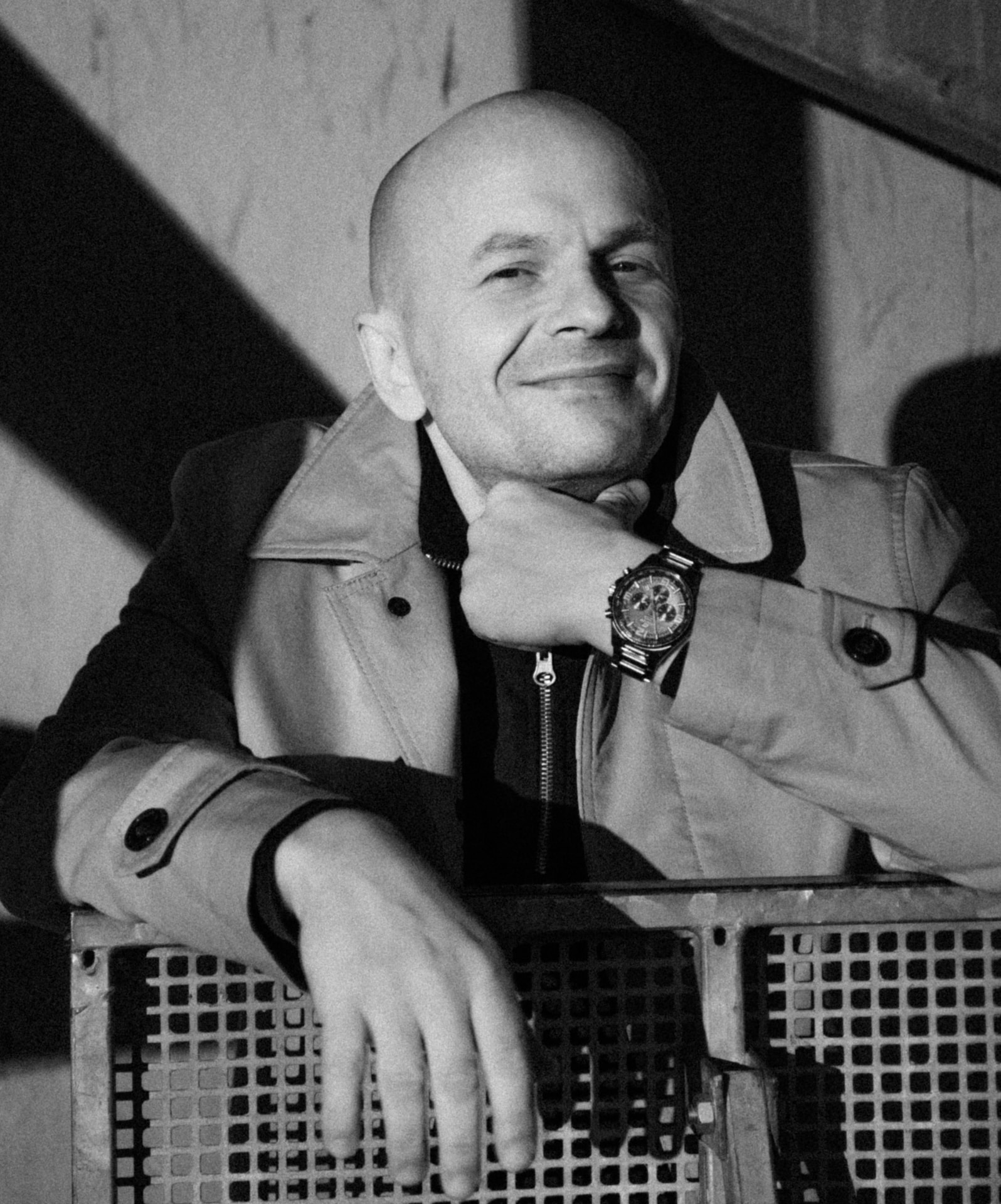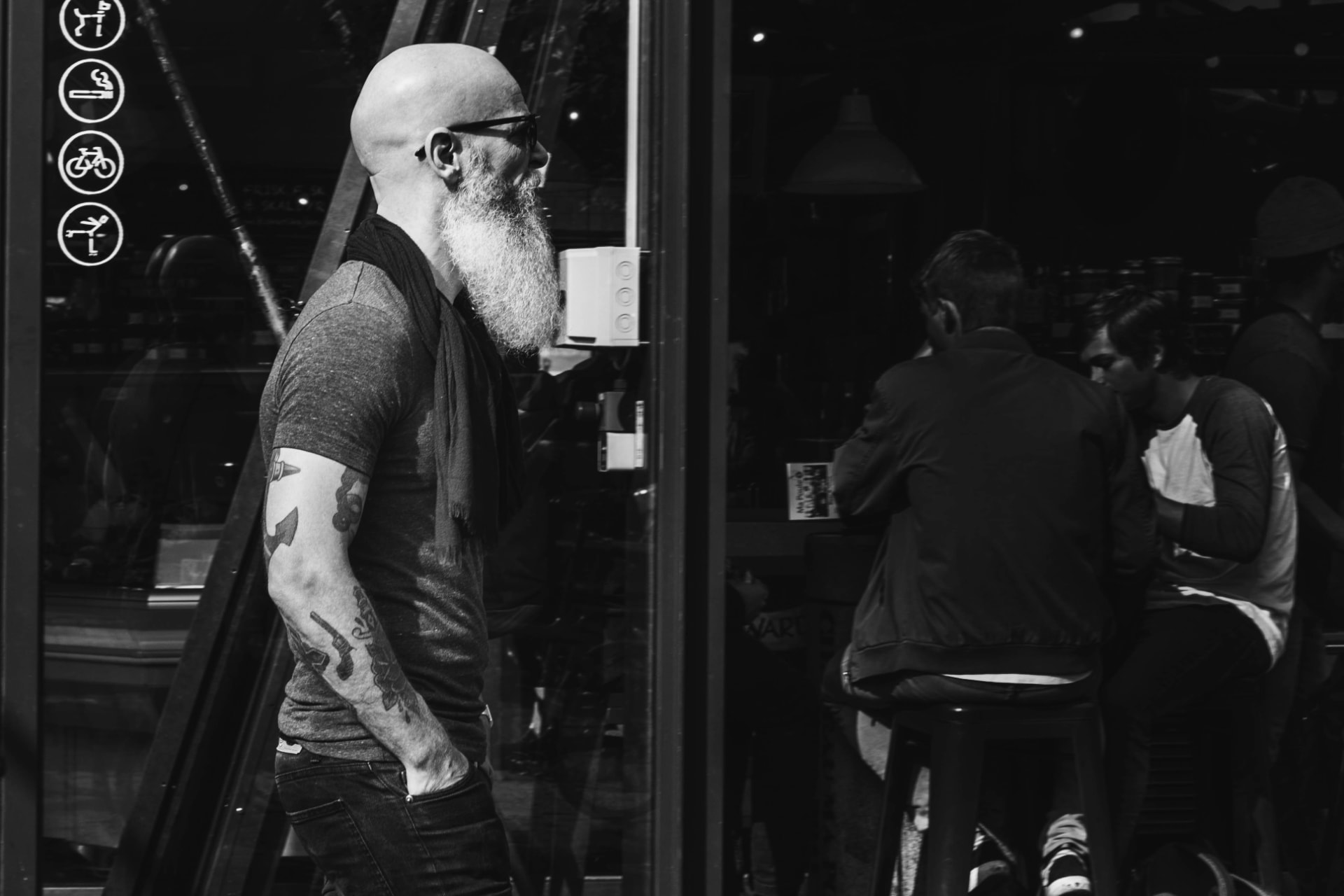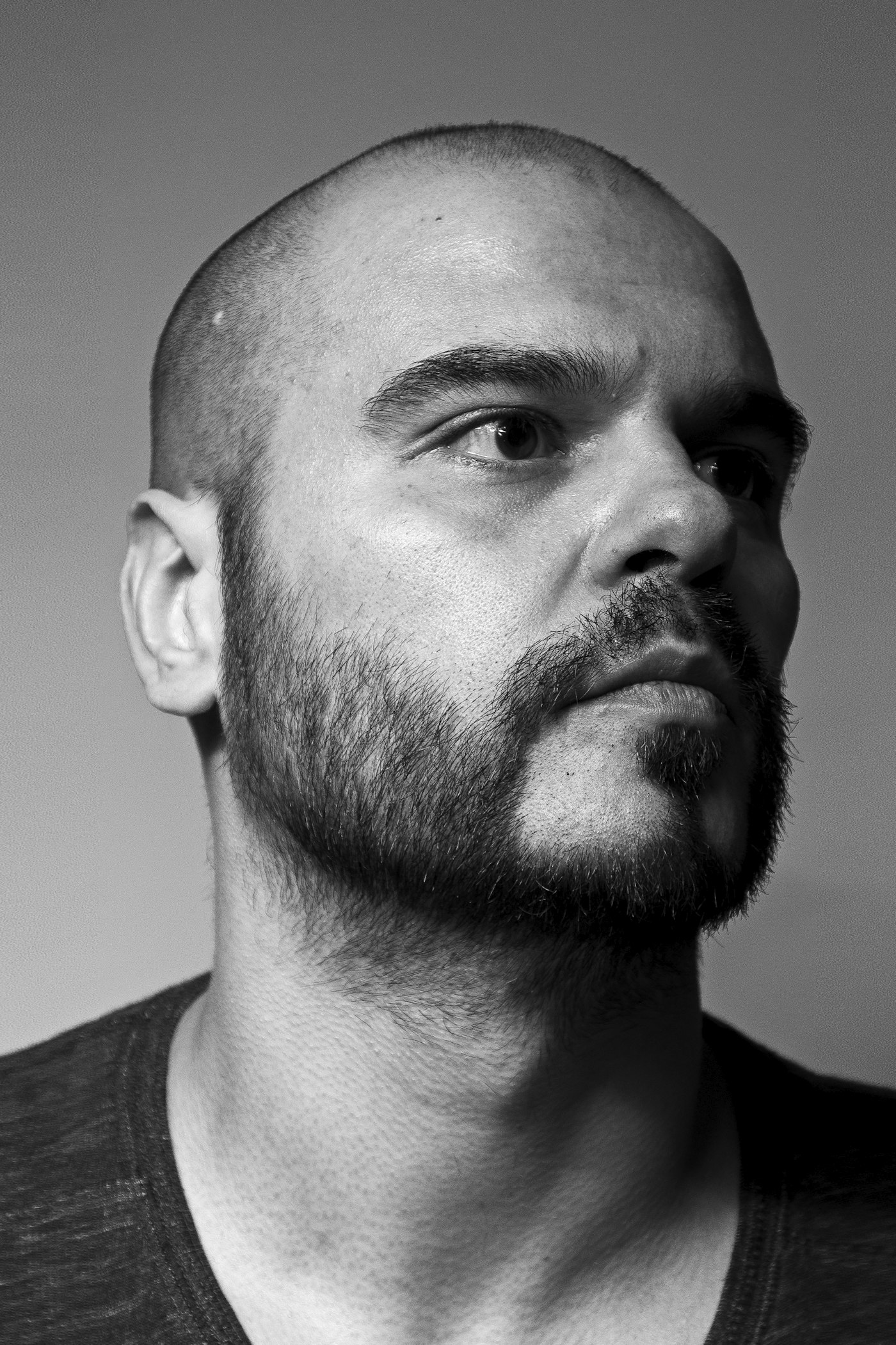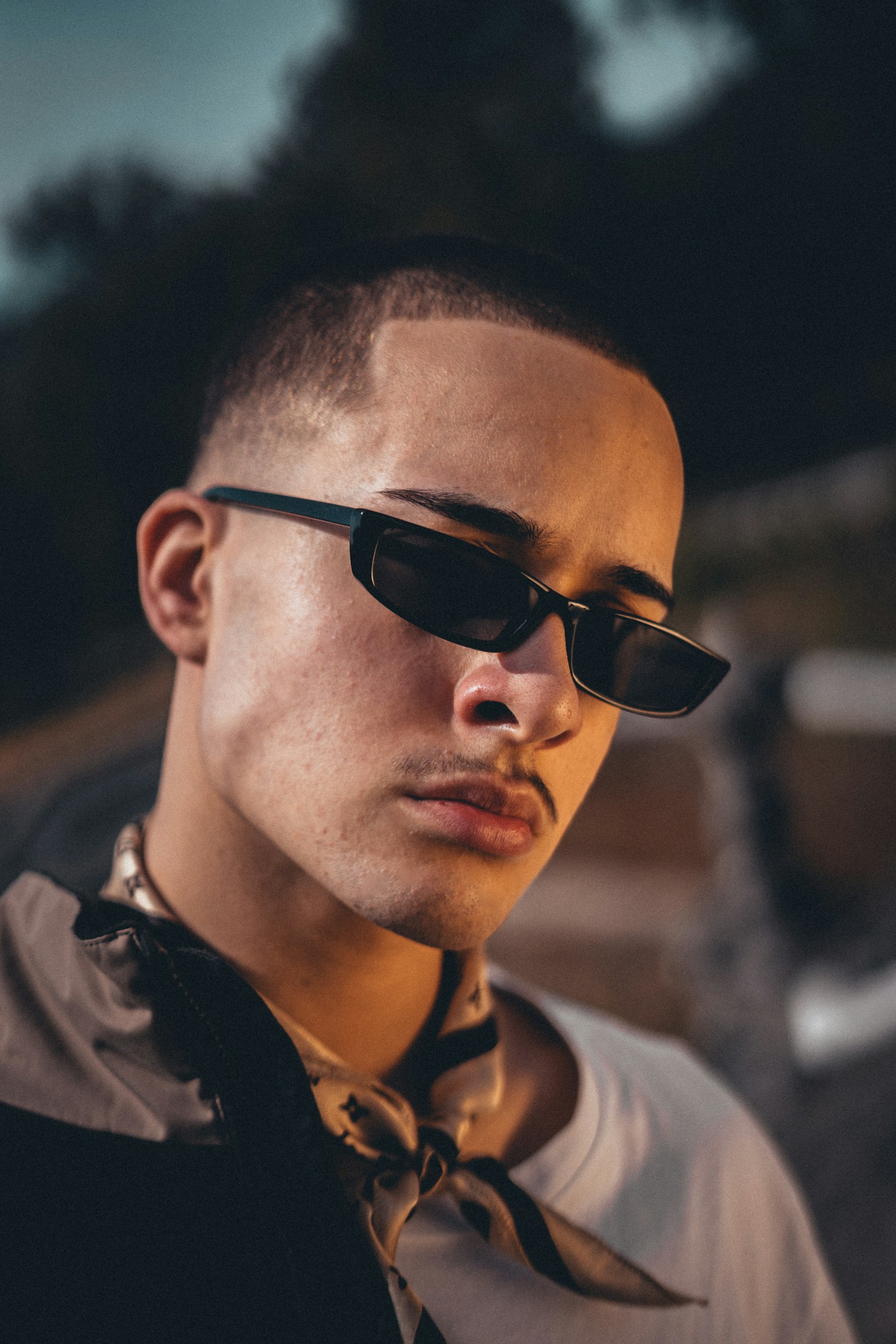
Sunglasses are never entirely neutral.
They sit at the centre of the face, cover the eyes, alter the brow line and create a strong block of colour close to the skin.
When you have a full head of hair, the frames compete with other visual structure around the face. When you are bald or closely buzzed, they become architecture.
A strong pair can make the face appear more defined, bring attention to the eyes and create the contrast that hair once provided. A weak pair can look undersized, overly sporty, too delicate or disconnected from the rest of the outfit.
The aim is not to find “sunglasses for bald men” as though one frame suits everyone. The aim is to choose a frame whose shape, width, colour and visual weight support your face.
Why sunglasses matter more without hair
Hair provides a natural upper frame.
It creates:
- width above the temples
- contrast around the forehead
- a boundary between the head and background
- colour near the brows and eyes
- visual balance between the upper and lower face
Once that disappears, the forehead and scalp become one continuous shape. Sunglasses can restore some of the missing definition.
They can widen a narrow face, add angles to a round face, soften a square jaw or create stronger contrast against light skin.
They can also connect the head to the rest of the outfit through colour and material. Black acetate can echo black shoes or a belt. Tortoiseshell can connect with brown leather and warmer clothing. Silver frames can repeat the finish of a watch or chain.
This is why eyewear should not be treated as a separate decision from beard, clothing and accessories. It sits at the centre of all three.
Start with frame width
Width is the most important fit decision.
A frame that is too narrow can make the head appear larger and squeeze the temples. A frame that is too wide can look as though it is floating beyond the face.
As a starting point, the outer edge of the frame should sit close to the widest part of your face. A slight extension beyond the cheekbones can work, especially with angular styles, but it should look deliberate.
Check three things:
- The temples should not bow outward dramatically.
- The frame should not pinch above the ears.
- The eyes should sit reasonably close to the horizontal centre of each lens.
Do not judge width only from a close mirror. Take a photograph from normal conversational distance. Frames that look bold at 20 centimetres may look perfectly balanced from two metres away.
- Do:Frame sits close to the width of the face
- Do:Temples run back without bowing
- Do:Eyes sit near the centre of the lenses
- Do:Frame does not rest heavily on the cheeks
- Do:Brows remain visible or intentionally covered
- Don't:Hinges sit well inside the sides of the face
- Don't:Temples flare outward
- Don't:Frame extends far beyond the cheekbones
- Don't:Lenses touch the cheeks when smiling
- Don't:Bridge slides continuously down the nose
Scale matters as much as width
Scale refers to the overall visual size and weight of the glasses. Two frames may have the same width but feel completely different.
A thin metal aviator is visually lighter than a thick black acetate square. A shallow lens feels smaller than a deep lens. A transparent frame recedes more than a dark one.
Bald and shaved-headed men often benefit from a little more frame presence because there is less competing structure above the face. That does not mean oversized glasses are always better. The goal is enough presence to anchor the face without overwhelming it.
A useful rule:
- stronger facial features can support stronger frames
- softer features often benefit from moderate frames with clear structure
- large beards may need simpler eyewear
- clean-shaven faces may benefit from slightly more frame weight
Match the frame to your face shape
Face-shape categories are guides, not laws. Most faces contain elements of several shapes. Use them to understand what the frame is adding or reducing.
Round face
A round face usually benefits from angles.
Look for:
- rectangular frames
- square frames
- Wayfarer-inspired shapes
- defined brow lines
- modestly upswept corners
These shapes create horizontal and diagonal lines that contrast with softer facial curves.
Avoid extremely small round lenses if they repeat the face shape without adding structure. That does not mean every rounded frame is wrong. A rounded lens with a strong angular brow line may still work.
Square face
A square face already has a strong jaw and visible angles. Softer frame shapes can create balance.
Consider:
- rounded rectangles
- panto shapes
- softly curved aviators
- frames with thinner lower rims
- moderate lens depth
Very heavy square frames can create a highly architectural look, but they may feel severe if paired with a square jaw and short, sharp beard.
Oval face
Oval faces usually have the most flexibility.
They can support:
- Wayfarers
- aviators
- square acetate
- rounded panto frames
- browline styles
The main risks are poor scale and frames that are too narrow. Choose based on personal style, beard and clothing rather than trying to correct the face.
Long or rectangular face
A longer face often benefits from more lens depth.
Look for:
- taller lenses
- strong horizontal brow lines
- moderate width
- deeper aviators
- larger Wayfarer shapes
Very shallow rectangular frames can make the face look longer. Avoid placing all the visual weight at the top of the face while leaving too much empty length below.
Heart-shaped face
A broader forehead and narrower jaw can work well with:
- frames that are not excessively top-heavy
- rounded lower edges
- medium-weight acetate
- subtle aviators
- shapes with balanced lens depth
Heavy browline frames can exaggerate forehead width, particularly on a shaved head. A frame with a little more lower-lens presence may create better balance.
The most reliable frame shapes
Certain shapes work repeatedly because they provide structure without becoming costume-like.
Wayfarer-inspired frames
The Wayfarer remains a dependable choice because it combines:
- a strong brow line
- moderate angles
- useful lens depth
- enough frame weight to anchor the face
It works especially well on round, oval and softly square faces. A classic black version creates high contrast. Dark tortoiseshell feels warmer and slightly less severe.
Avoid versions that are dramatically wider than your temples or excessively tilted forward.
Rectangular acetate frames
Rectangular frames create immediate definition.
They are useful for:
- rounder faces
- soft jawlines
- light skin with low facial contrast
- grey or white stubble
- men who want a clean, professional look
The frame does not need to be thick. A medium-weight rectangle often looks more refined than a very heavy block.
Square frames
Square frames are bolder and more fashion-led. They can look excellent on oval, long and softly rounded faces.
They add visual confidence and work well with:
- short beards
- structured clothing
- open collars
- simple jewellery
- shaved or tightly buzzed scalps
Be careful when combining large square frames with a large square beard. Too many strong shapes can crowd the face.
Aviators
Aviators vary enormously.
The traditional teardrop aviator has curved lenses and a thin metal frame. It can soften a square face and introduce a lighter visual structure. Square aviators feel more modern and defined.
Aviators often work best when:
- the frame is close to the width of the face
- the lenses do not descend too far onto the cheeks
- the bridge sits securely
- the metal colour connects with jewellery or a watch
Very thin aviators may disappear on a face with little contrast. In that case, choose a darker lens or slightly heavier frame.
Browline frames
Browline styles place most of the visual weight across the upper half of the lenses. This can restore a strong brow line where hair is absent.
They work particularly well on:
- oval faces
- long faces
- men with lighter eyebrows
- clean-shaven faces
- understated wardrobes
They may be too top-heavy for heart-shaped faces or very broad foreheads.
Round and panto frames
Round frames can create an intelligent, creative or vintage impression. They are strongest when they contrast with angular facial features.
A square jaw, defined beard or strong brow can support a round frame well. On a very round face, choose a panto frame with a flatter top or angular bridge rather than a perfect circle.
Frame colour: contrast or harmony
Frame colour can either contrast with the face or harmonise with it. Both approaches can work.
Matte black
Black creates the strongest definition.
It works well with:
- light skin
- dark brows
- dark stubble
- monochrome clothing
- cool colour palettes
- black accessories
Matte black usually feels more refined than high-gloss black. Gloss can look excellent, but it attracts more visual attention and may emphasise surface shine elsewhere.
Dark tortoiseshell
Tortoiseshell provides contrast with more warmth and variation.
It suits:
- warm or neutral skin
- brown, red or salt-and-pepper beards
- olive, camel and navy clothing
- brown leather
- classic wardrobes
Choose darker tortoiseshell if you need more definition. Very pale tortoiseshell may disappear against warm skin.
Crystal and transparent frames
Clear, smoke and crystal frames are modern and understated. They work best when another feature already provides contrast:
- dark eyebrows
- visible stubble
- strong lenses
- darker clothing
- a defined jaw
On a low-contrast clean-shaven face, completely clear frames may not add enough structure. Smoke grey or translucent brown often provides a better compromise.
Silver metal
Silver works naturally with cool skin tones, grey facial hair and silver accessories. It feels clean, technical and modern.
Repeat the metal through:
- a watch
- a chain
- belt hardware
- a ring
This prevents the eyewear from feeling isolated.
Gold metal
Gold works well with warm and olive complexions. It can add warmth and sophistication, but highly polished yellow gold may feel decorative if the rest of the style is restrained. Brushed gold, champagne or bronze finishes are often easier to wear.
Coloured frames
Deep navy, forest green, burgundy and muted blue can introduce colour without becoming novelty eyewear. Bright red, neon and highly patterned frames make a stronger statement and should connect clearly with personal style.
- Do:Cooler look: matte black, charcoal, smoke crystal, silver, deep navy
- Do:Warmer look: dark tortoiseshell, brown crystal, bronze, brushed gold, deep olive
- Do:High contrast: black acetate, crisp dark lenses, a strong brow line
- Do:Lower contrast: smoke, tortoiseshell, fine metal, translucent brown
- Don't:A pale frame chosen for a face that already lacks contrast
- Don't:A heavy black frame worn with no other dark element in the outfit
Lens colour affects the whole impression
Lens colour is not only a technical choice. It changes how heavy, warm, sporty or formal the sunglasses appear.
Grey lenses
Grey is neutral and modern. It preserves colour perception reasonably well and works with almost every frame colour. Dark grey lenses create a strong, understated look and are an excellent default for black, silver and smoke frames.
Green lenses
Classic green lenses, including G-15-style shades, add subtle character. They pair particularly well with:
- black Wayfarers
- tortoiseshell
- olive clothing
- navy
- brown leather
Green is often less severe than dark grey while remaining versatile.
Brown lenses
Brown and amber lenses create warmth. They work well with:
- tortoiseshell
- gold or bronze frames
- warm skin
- brown facial hair
- earthy clothing palettes
Very orange lenses can feel overtly sporty or retro. Choose a restrained brown for everyday use.
Blue lenses
Blue lenses range from subtle smoke-blue to bright mirrored finishes. Muted blue can look modern with silver frames and cool clothing. Highly reflective blue feels more athletic and attention-seeking. It may suit a strong streetwear or performance look but is less adaptable.
Mirrored lenses
Mirrored lenses increase visual impact and reduce eye visibility. They can create a bold, technical or futuristic impression. Use them when that intensity supports the rest of your style. On a clean-shaven bald head, mirrored lenses may become the dominant feature of the entire face.
Gradient lenses
Gradient lenses are darker at the top and lighter below. They feel softer and more fashion-led. They work well in aviators and larger acetate frames, particularly when full eye concealment is not required.
Polarised versus non-polarised lenses
Polarised lenses reduce reflected glare from surfaces such as water, roads and glass. They can be particularly useful for:
- driving
- boating
- beach use
- outdoor sport
- bright urban environments
Polarisation does not automatically mean better ultraviolet protection. UV protection and polarisation are separate properties. Choose sunglasses that clearly state appropriate UV protection.
Some digital displays can appear darker or distorted through polarised lenses depending on angle. For general daily use, polarisation is a practical advantage but not a styling requirement.
Eyebrows and frame placement
Eyebrows remain an important part of the face, especially without hair.
Frames can:
- sit below the brows
- follow the brow line
- partially cover the brows
- completely dominate them
There is no single correct placement. A frame that follows the eyebrow shape often looks cohesive. A strong browline frame can replace visual weight when eyebrows are pale or sparse.
If the frame cuts awkwardly through the brows, it may make the expression appear confused or heavy. Check the fit while looking straight ahead, not while raising the eyebrows in a shop mirror.
The bridge controls comfort and position
The bridge is the part of the frame that sits on the nose. If it is wrong, the sunglasses will:
- slide down
- sit too high
- touch the cheeks
- create pressure
- tilt forward
- require constant adjustment
Acetate frames generally use a fixed moulded bridge. Metal frames often have adjustable nose pads.
A low bridge or flatter nose may need:
- adjustable nose pads
- low-bridge-fit frames
- wider nose contact
- a frame designed to sit higher without sliding
The best-looking frame is useless if it cannot remain in position.
Temples and shaved heads
The arms of the glasses are more visible against a shaved scalp. This makes temple design and fit more noticeable.
Thick temples add strong side structure. Thin metal temples feel lighter and less dominant.
Check that the arms:
- sit straight
- do not bow outward
- do not press visibly into the skin
- do not create uncomfortable pressure behind the ears
- do not end awkwardly above the ear
A shaved head also reveals logos on the temples more clearly. Large branding can make the eyewear feel more commercial. Minimal branding usually aligns better with the Buzzmaxxing editorial aesthetic.
Sunglasses with facial hair
Beard and eyewear create two major frames on the face. They should balance rather than compete.
Clean-shaven
You can often carry stronger, darker or slightly larger frames because there is less visual weight below.
Short stubble
Most frame styles work. Stubble adds enough structure to support clear, smoke, metal or dark acetate frames.
Short boxed beard
Medium-weight frames usually create the best balance. If the beard is dark and dense, transparent or metal frames can prevent the face from feeling overloaded.
Full beard
A full beard already provides significant texture and visual weight.
Consider:
- cleaner frame shapes
- thinner temples
- restrained colours
- moderate lens depth
- fewer competing accessories
Coordinate sunglasses with clothing colour
Eyewear does not need to match clothing colour exactly. It should belong to the same visual system.
Black frames connect naturally with:
- black
- charcoal
- navy
- crisp white
- silver accessories
Tortoiseshell works with:
- olive
- cream
- camel
- rust
- brown leather
- warm navy
Silver frames work with:
- slate
- charcoal
- royal blue
- cool white
- grey facial hair
Gold and bronze work with:
- chocolate
- olive
- cream
- terracotta
- warm neutrals
The easiest approach is repetition. Repeat one material or colour elsewhere in the outfit. A silver watch. A brown belt. Black shoes. This creates cohesion without obvious matching.
Scalp shine and reflective eyewear
A shaved scalp naturally reflects light.
Highly polished frames and mirrored lenses add more reflective surfaces near the face. That can look deliberate in a fashion-led or technical outfit. It can also make the entire upper half of the body feel overly glossy.
If scalp shine is already prominent, consider:
- matte acetate
- brushed metal
- non-mirrored lenses
- restrained jewellery
- a light mattifying moisturiser
The goal is not to remove all reflection. It is to control where the eye goes first.
Sunglasses for different style identities
Minimal and refined
Choose:
- matte black rectangle
- dark grey lenses
- minimal branding
- moderate frame weight
This works with monochrome clothing, tailored separates and simple accessories.
Classic
Choose:
- dark tortoiseshell Wayfarer
- green or brown lenses
- medium frame weight
- brown leather accessories
This works well with Oxford shirts, knitwear, denim and navy jackets.
Creative
Choose:
- panto or rounded frames
- smoke crystal
- deep coloured acetate
- subtle gradient lenses
Keep the rest of the outfit restrained so the eyewear reads as intentional.
Modern and high-contrast
Choose:
- square black or clear acetate
- dark charcoal lenses
- silver metal details
- crisp black, white or royal blue clothing
This suits bleached buzz cuts, dark stubble and modern jewellery.
Athletic
Choose:
- secure fit
- lightweight material
- polarised lenses
- moderate wrap
- matte finish
Avoid wearing highly technical wraparound frames as default casual sunglasses unless the rest of the outfit supports the performance aesthetic.
When sports sunglasses work
Sports frames are designed for coverage, security and airflow. They make sense for:
- cycling
- running
- hiking
- water sports
- motorcycling
- high-glare environments
They are less adaptable in restaurants, offices and general social situations.
A useful wardrobe may include:
- One everyday pair
- One sport-specific pair
Do not ask one pair to do every job.
The problem with frames that are too small
Undersized sunglasses are one of the most common mistakes. They can:
- make the face appear wider
- exaggerate forehead and scalp size
- create pressure at the temples
- appear dated
- reduce eye protection
- look visually timid
This is especially noticeable with tiny rectangular and circular styles. Small frames can work as a deliberate fashion statement, but they require confidence and a cohesive outfit. They are not a safe default.
The problem with frames that are too large
Oversized frames can:
- dominate the face
- rest on the cheeks
- hide the eyebrows entirely
- make the nose appear smaller
- feel costume-like
- compete with a beard or hat
The frame should be noticed. It should not erase the person wearing it.
Buying sunglasses online
Online shopping removes the ability to judge physical fit, but you can improve the odds.
Check:
- total frame width
- lens width
- bridge width
- temple length
- lens height
Compare these measurements with a pair you already own. Many frames list numbers such as 52–20–145.
This usually means:
- 52 mm lens width
- 20 mm bridge width
- 145 mm temple length
Total width depends on frame construction, so lens width alone is not enough. Use virtual try-on tools cautiously. They can suggest shape and colour but do not reliably show scale, bridge fit or temple pressure. Choose retailers with clear returns policies.
- Do:Measure a pair that already fits
- Do:Compare total width where available
- Do:Check bridge type and review lens depth
- Do:Confirm UV protection and read the return policy
- Do:On arrival, photograph front and side views
- Do:Smile to check cheek contact and look down to test slipping
- Do:Wear for at least ten minutes indoors and check temple pressure
- Don't:Judging the frame only on the face, not the full outfit
Trying frames in person
Bring or wear the elements you normally use:
- your usual beard length
- normal clothing colours
- everyday jewellery
- a clean scalp or your normal buzz length
Try at least three categories:
- A safe frame
- A stronger frame
- A lighter frame
For example:
- dark Wayfarer
- bold square acetate
- silver aviator
This comparison helps reveal whether you need more or less visual weight. Ask someone to take normal-distance photographs. Do not rely entirely on sales-floor mirrors.
How many pairs do you need?
For most men, two pairs are enough to start.
Pair one: everyday
Choose the most versatile shape and colour. Good examples:
- black Wayfarer
- dark tortoiseshell rectangle
- smoke square acetate
- silver square aviator
Pair two: specific purpose
Choose based on your lifestyle:
- polarised driving pair
- sport pair
- lighter summer frame
- stronger statement frame
A third pair becomes useful when eyewear is a major part of personal style. Do not buy several variations before identifying the proportions that suit you.
Care and maintenance
Sunglasses sit against skin, sweat and scalp products. Clean them regularly.
Use:
- lukewarm water
- mild soap
- clean microfibre cloth
- a hard case
Avoid wiping dry lenses with a T-shirt. Dust can scratch the coating. Check screws and nose pads periodically. If the frame becomes loose, have it adjusted rather than repeatedly pushing it back into shape.
Hair no longer hides crooked temples or an uneven frame. Alignment matters more.
Common mistakes
Choosing brand before fit
A recognisable logo does not correct poor proportions.
Buying frames that are too narrow
This exaggerates head width and causes discomfort.
Treating every aviator as the same
Lens depth, bridge, frame thickness and shape vary significantly.
Ignoring the beard
Strong beard plus strong frame can become visually crowded.
Ignoring frame colour
A pale clear frame may disappear. A heavy black frame may overpower.
Wearing sports sunglasses everywhere
Performance design does not automatically translate to everyday style.
Using mirrored lenses without considering scalp shine
Too many reflective surfaces can dominate the face.
Keeping scratched lenses too long
Scratches reduce clarity and make otherwise good frames look neglected. If the face in the mirror still feels unfamiliar, that is normal — confidence usually follows consistency rather than the other way round.
The three-frame test
When comparing sunglasses, use three deliberately different options.
Frame one: strong and dark
For example, matte black rectangular acetate.
Frame two: warm and classic
For example, dark tortoiseshell Wayfarer.
Frame three: light and minimal
For example, silver square aviator or smoke crystal.
Photograph each in:
- front view
- three-quarter view
- side view
- natural daylight
- the same clothing
- your normal facial hair
Compare:
- face definition
- frame width
- brow relationship
- cheek contact
- head-to-frame balance
- connection with beard and clothing
Do not choose the pair that looks most interesting by itself. Choose the pair that makes the entire face look clearer.
Final takeaway
Sunglasses do more than block light.
On a bald or closely buzzed head, they become one of the main structural elements of the face.
Start with fit. Choose a frame close to the width of your face. Use shape to add what your features need: angles, softness, depth or width.
Choose enough visual weight to anchor the face, but not so much that the glasses become the entire identity. Connect the frame colour with your beard, clothing and accessories. Then test the result from a normal distance.
The right sunglasses should make your face look stronger before anyone notices the brand.
Frequently asked questions
There is no single best style. Wayfarer-inspired, rectangular and square frames are reliable because they add structure. The best choice depends on face shape, frame width, beard, colouring and personal style.
Often they benefit from moderate frame presence, but oversized frames can overwhelm the face. The frame should sit close to the width of the face and provide enough visual weight without covering too much of it.
Yes. Aviators can soften angular faces and add a clean metal detail. Square aviators provide more structure, while traditional teardrop shapes feel softer. Correct width and bridge fit are essential.
Black frames create strong definition and work well with light skin, dark brows, stubble and monochrome wardrobes. Men with softer contrast may prefer tortoiseshell, smoke crystal or metal frames.
Rectangular, square and Wayfarer-inspired frames usually add useful angles. Avoid extremely small circular lenses that repeat the roundness without creating structure.
Yes, especially when eyebrows, beard, lenses or clothing already provide contrast. Completely clear frames may disappear on a low-contrast clean-shaven face, so smoke or tinted crystal can work better.
They do not need to match, but they should balance. A large dark beard may suit lighter or simpler frames. Short stubble can support stronger acetate or metal styles.
Polarised lenses reduce reflected glare and are useful for driving, water and bright outdoor conditions. They do not replace the need for proper UV protection.
Dark grey is the most neutral. Classic green is also versatile and works particularly well with black or tortoiseshell frames.
The hinges may sit inside the widest part of the face, the temples may bow outward and the frame may make the head appear wider. The eyes may also sit too close to the outer edges of the lenses.
The strongest recommendation depends on your face shape, skin tone, beard, eyebrows, head shape and personal contrast. Upload one clear photo and receive recommended everyday frame shapes, sunglasses style and colour direction, beard and facial-hair advice, clothing colours, neckline guidance, scalp and hair-maintenance advice, plus the single highest-impact change you can make. One photo. Personal style advice in under 30 seconds.
Upload Photo