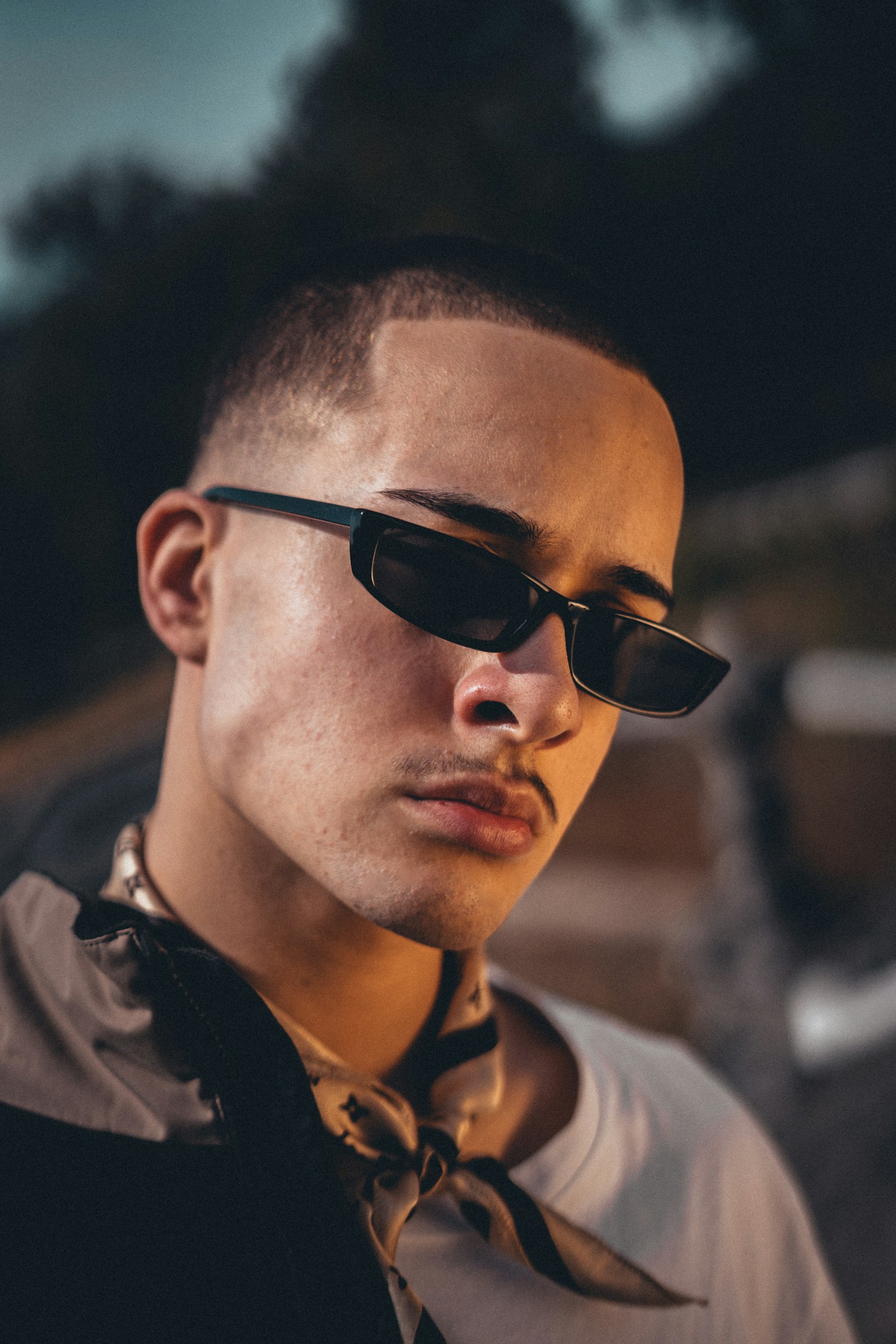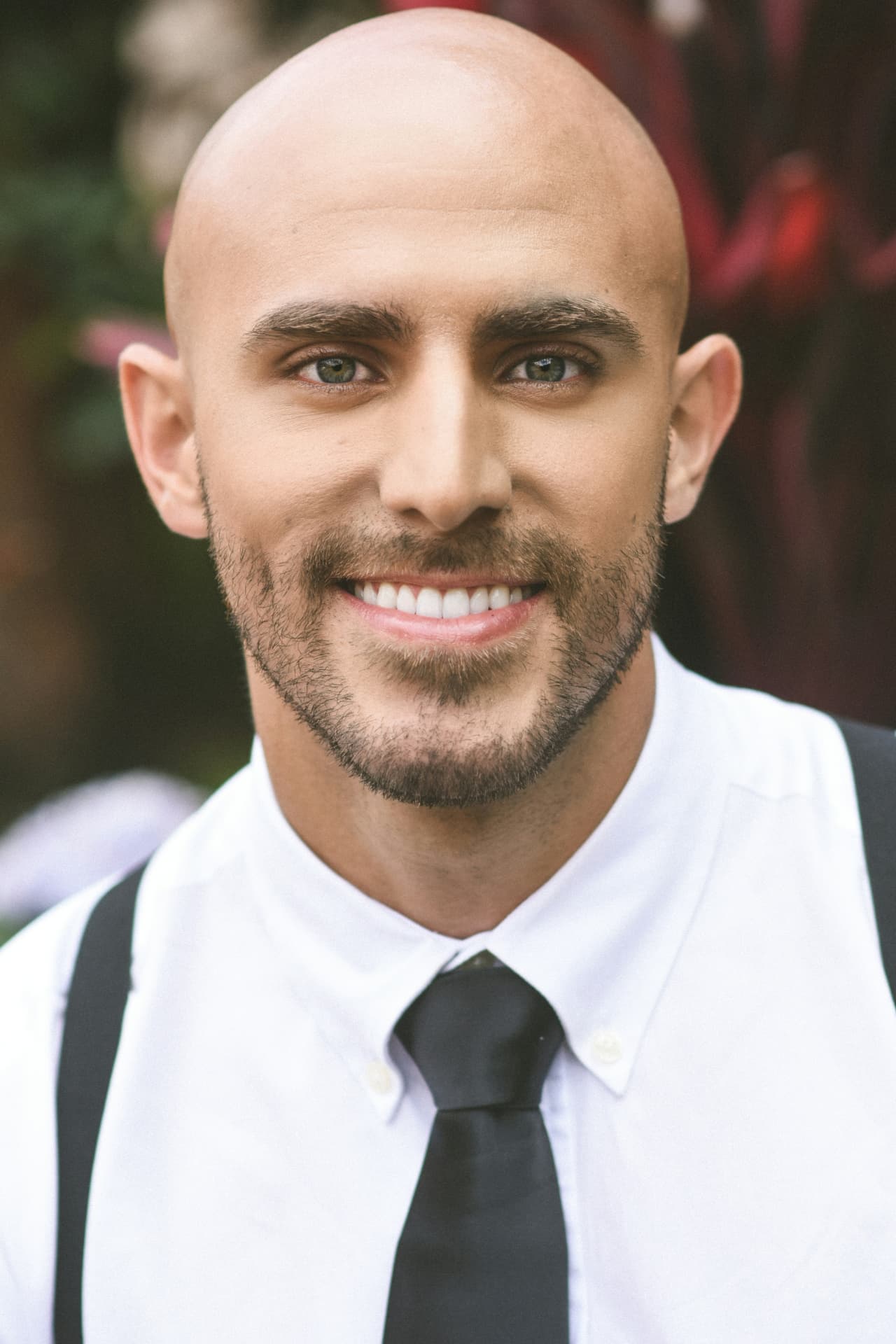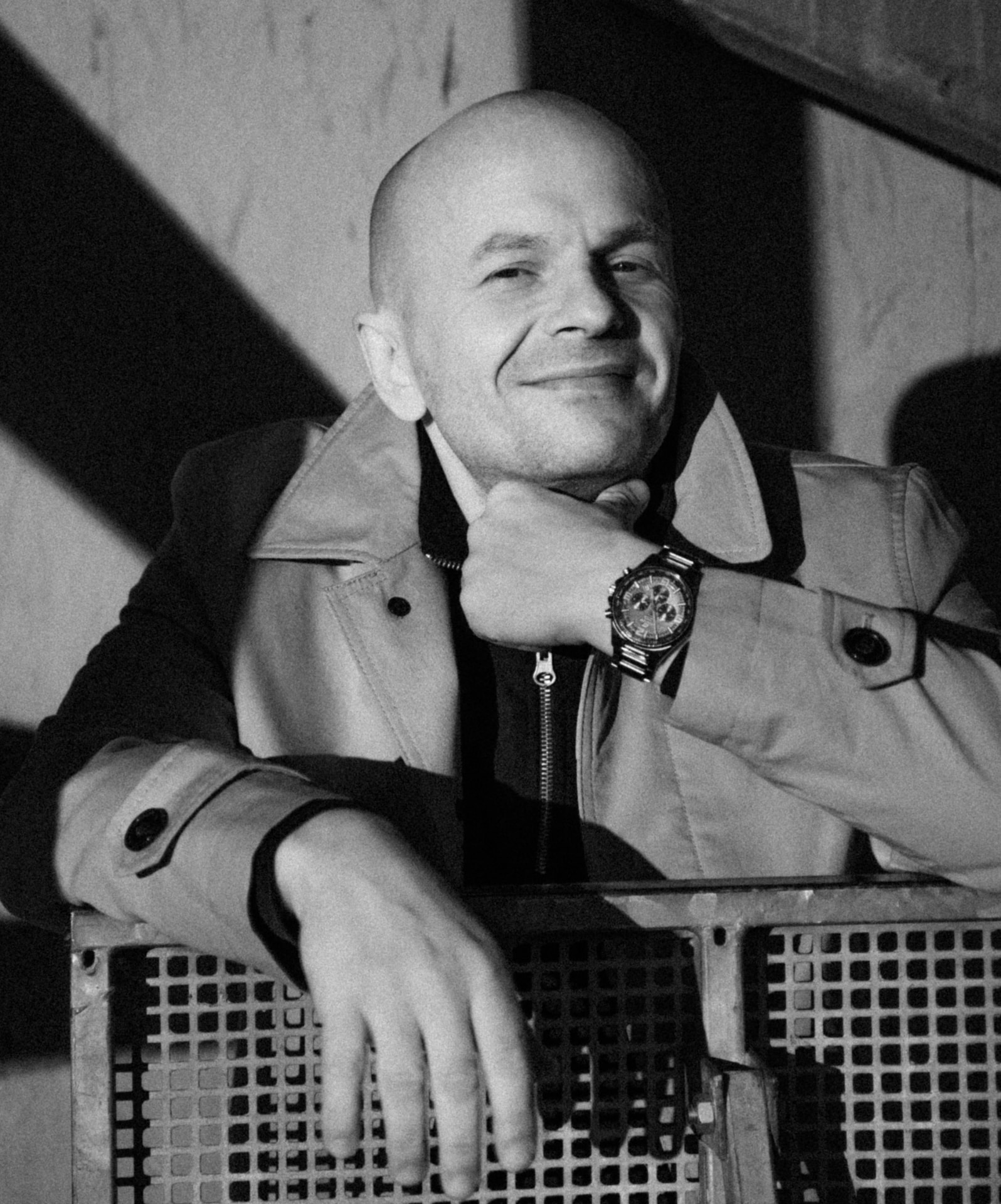
Hair creates more than a hairstyle. It creates colour, contrast and visual weight around the face. Remove it and the rest of your wardrobe starts doing more work.
A dark head of hair can frame the eyes, separate the face from the background and create a natural boundary above the forehead. Once that frame disappears, the colours closest to your face become more influential. A T-shirt, shirt, knit or jacket can either restore definition or make your skin, clothing and scalp blend into one flat block.
This is why two men with shaved heads can wear the same black T-shirt and look completely different. The colour has not changed. Their contrast, skin tone, beard colour and facial structure have.
The aim is not to follow rigid fashion rules. It is to choose colours that make your face look clearer, your eyes more noticeable and your overall appearance more intentional.
Start with contrast, not colour seasons
Before thinking about warm autumns, cool winters or any other seasonal label, look at your natural contrast.
Ask:
- Are your eyebrows much darker than your skin?
- Is your beard noticeably darker or lighter than your complexion?
- Do your eyes stand out strongly?
- Does your face have obvious light and dark features, or does everything sit within a similar tonal range?
A man with pale skin, dark brows and a dark beard has high facial contrast. He can usually carry stronger combinations such as black and white, crisp navy, saturated blue and deep forest green.
A man with light skin, grey stubble and pale brows has softer contrast. He may look better in charcoal, slate, muted navy, soft white and blended mid-tones rather than stark black and optic white.
Neither is better. They simply need different support from clothing.
A quick contrast test
Stand in indirect daylight and take three photographs wearing:
- A black or very dark top
- A medium neutral such as navy or charcoal
- A light top such as white, stone or pale blue
Ignore the clothes for a moment and compare your face.
Look for:
- clearer eyes
- more defined brows
- even-looking skin
- stronger separation between face and shirt
- less visible redness or greyness
The colour that makes your face look strongest is usually the better starting point.
- Do:Compare colours in natural daylight
- Do:Photograph the full upper body
- Do:Judge your face before judging the garment
- Do:Test colours beside your beard and eyewear
- Don't:Choosing from a shop mirror under harsh lighting
- Don't:Assuming black is always the most flattering
- Don't:Judging colours in isolation
- Don't:Buying several shades before testing one
Why a shaved head changes the colour equation
Hair normally acts as a buffer between the skin and the surrounding environment. It creates a dark, light, warm or cool zone around the top of the face.
When that disappears, the scalp becomes part of the visible skin area. This creates a larger uninterrupted field of complexion, especially from the front.
The colour at the neckline now affects:
- how warm or cool your skin appears
- whether facial redness is exaggerated
- whether a grey beard looks distinguished or washed out
- how much definition exists between your head, neck and torso
- whether scalp shine becomes more noticeable
This is why clothing colour is not a minor finishing detail for bald men. It becomes part of the facial frame.
The five most reliable colours
There is no universal palette, but several colours work across a broad range of complexions.
1. Navy
Navy is the strongest all-round starting point.
It creates definition without the severity of pure black. It works in casual and formal settings, pairs with almost every neutral and tends to photograph well.
For men with light skin, navy creates a clean border without draining the complexion. For deeper skin tones, it provides structure while allowing the face to remain the focal point.
Start with:
- a fitted navy crew-neck T-shirt
- a navy overshirt
- a fine-gauge navy knit
- an unstructured navy blazer
A slightly muted navy is often more versatile than an extremely bright or electric version.
2. Charcoal
Charcoal is particularly useful for men with grey facial hair, cool undertones or softer contrast.
It gives the structure of black without creating such a hard edge. It also works well with silver jewellery, black eyewear, white trainers and dark denim.
Choose charcoal when black makes you look tired or when light grey washes you out.
3. Olive
Olive brings colour without looking decorative.
It is especially strong on men with warm, golden, olive or neutral skin. It also pairs naturally with brown leather, denim, cream, navy and black.
An olive overshirt is one of the easiest pieces to add to a basic wardrobe because it provides visual interest while remaining understated.
4. Deep forest green
Forest green is richer and cooler than olive.
It works well with many skin tones and can make blue, green or hazel eyes more noticeable. It also sits comfortably beside grey, white or dark facial hair.
Use it in:
- heavyweight T-shirts
- polos
- knitwear
- jackets
- casual shirts
5. White or soft white
White can create excellent contrast, but it needs to be chosen carefully.
Crisp white works best when you already have strong dark features: dark brows, beard, eyes or eyewear. It creates a sharp, modern result.
If your colouring is softer, choose:
- ivory
- ecru
- off-white
- stone
- pale cream
These shades provide lightness without creating a harsh break against the face.
Is black always flattering?
No.
Black is popular because it appears clean, masculine and simple. It also feels like a safe choice after shaving your head because it creates obvious contrast.
But it can also:
- exaggerate dark circles
- make very light skin look drained
- intensify facial redness
- overpower pale brows and grey stubble
- make the overall appearance feel harsher than intended
Black works best when your face already has strong contrast.
It is often excellent for men with:
- dark eyebrows
- dark facial hair
- deep skin tones
- strong eye definition
- bold eyewear
For softer colouring, navy or charcoal usually creates the same sense of polish with less severity.
Colours that often cause problems
These are not forbidden, but they require more care.
Beige close to your skin tone
When a shirt closely matches the skin, the head, neck and torso can merge into one low-contrast area.
This is especially common with:
- pale beige
- oatmeal
- washed stone
- light camel
- warm taupe
The fix is not always to avoid beige. Choose a version that is clearly lighter, darker or warmer than your complexion and add contrast through a jacket, beard, glasses or collar.
Light heather grey
Light grey is a common basic, but it often lacks enough depth to frame the face.
It can make pale or cool complexions look flat. Charcoal, slate or blue-grey usually performs better.
Bright yellow
Yellow reflects warmth upward and can exaggerate redness, sallowness or scalp shine.
Muted mustard can work on warm autumn colouring, but bright lemon yellow is difficult for many men to wear near the face.
Neon colours
Neon creates a stronger visual signal than the person wearing it.
That may be intentional in sportswear, but for everyday style it often shifts attention away from the face.
Dusty pastels
Muted pink, pale lavender and powder blue can be excellent on the right colouring, but they may drain men with low contrast or visible redness.
Test them carefully rather than assuming all soft colours are flattering.
Warm and cool colour families
Seasonal colour analysis is useful when it simplifies decisions rather than creating rules.
Warmer colouring often suits
- olive
- rust
- terracotta
- chocolate
- camel
- warm navy
- cream
- moss green
- burgundy with a brown base
Warm colouring may be indicated by golden, peach, olive or neutral-warm skin, brown or hazel eyes, and facial hair with brown, red or golden tones.
Cooler colouring often suits
- charcoal
- slate
- cool navy
- forest green
- deep plum
- burgundy with a blue base
- crisp white
- steel blue
- cool grey
Cool colouring may be indicated by pink, rosy or blue undertones, grey or blue eyes, and ash, silver or neutral facial hair.
Neutral colouring
Many men sit between the two.
Neutral complexions can often wear both families, but still have preferred levels of depth and contrast. A neutral man may suit navy, forest green, charcoal, medium olive and soft white while looking less convincing in extreme orange or icy pastel.
Facial hair changes the palette
Your beard is part of your colour story.
A dark beard increases contrast and can make stronger colours easier to wear, which is why beard length and density should be decided alongside your palette.
A white or silver beard often looks excellent with:
- navy
- charcoal
- forest green
- burgundy
- slate blue
- deep plum
A warm brown or red beard often works well with:
- olive
- cream
- camel
- rust
- warm navy
- chocolate
A clean-shaven face has less natural framing, so clothing and eyewear need to create more structure.
This is why beard advice and colour advice should not be separated. They influence each other.
Eyewear should connect with clothing
Frames sit directly on the face, so eyewear can bridge the gap between complexion and clothing.
Matte black frames work naturally with:
- black
- charcoal
- navy
- crisp white
- cool silver accessories
Dark tortoiseshell works with:
- olive
- camel
- rust
- chocolate
- cream
- warm navy
- brown leather
Silver frames work well with:
- slate
- charcoal
- royal blue
- cool white
- silver jewellery
Crystal or smoke frames are useful when clothing and facial hair already provide enough contrast.
The point is not perfect matching. It is repetition. Repeating one or two tones makes the overall look feel considered.
Necklines matter as much as colour
The neckline creates the nearest visible boundary around the face and neck.
Crew neck
A fitted crew neck creates a clear, structured edge.
It is one of the strongest options for bald men because it adds definition without distraction.
Look for:
- a collar that sits flat
- enough thickness to hold its shape
- a neckline that does not stretch
- shoulder seams that align correctly
V-neck
A shallow V-neck can lengthen the torso and reduce visual heaviness around a broad neck.
A deep V-neck often removes too much structure and can make the head appear larger by comparison.
Polo
A polo adds lines around the neck and upper chest.
It is useful for men who want more structure than a T-shirt without wearing a formal shirt.
Choose collars that hold their shape rather than curling or collapsing.
Open collar
An open camp or Cuban collar introduces skin and softens the transition between face and clothing.
It works especially well in warm climates and can balance a strong beard or heavy eyewear.
Oxford shirt
A structured Oxford collar creates angles around the jaw and neck.
It is particularly useful for rounder faces and can make a simple outfit look more deliberate.
- Do:Firm crew neck
- Do:Structured polo
- Do:Oxford button-down
- Do:Controlled open collar
- Don't:Deep V-necks
- Don't:Stretched collars
- Don't:Oversized scoop necks
- Don't:Very thin, collapsing fabric
How fit affects colour
A flattering colour cannot rescue poor fit.
Loose shoulders, excess fabric and stretched collars weaken the structure that a shaved head often benefits from.
Focus on:
- shoulder seams sitting close to the shoulder edge
- sleeves following the arm without clinging
- enough room through the torso to move
- a neckline that stays flat
- fabric with enough weight to hold shape
Dark colours in oversized clothing can create a large block beneath the head. Light colours in excessively tight clothing can draw attention to every fold.
The aim is controlled shape, not tightness.
Building a practical colour wardrobe
You do not need to replace everything.
Start with a compact system.
Core tops
- Navy crew-neck T-shirt
- Charcoal crew-neck T-shirt
- Soft white or crisp white T-shirt
- Olive overshirt
- Light blue or white Oxford shirt
- Forest green or burgundy knit
Outer layers
- Navy blazer or chore jacket
- Charcoal coat
- Olive field jacket
- Dark denim jacket
Trousers
Keep trousers quieter than the upper body when refining your facial palette.
Useful options:
- dark indigo denim
- charcoal trousers
- navy chinos
- stone chinos
- olive trousers
Shoes and accessories
Repeat the tones used near the face.
Examples:
- tortoiseshell glasses with brown leather
- black frames with black shoes or belt
- silver frames with a steel watch
- olive jacket with brown suede
- navy knit with white trainers
The fitting-room test
Shop lighting is unreliable.
Before removing tags, try the garment at home in indirect daylight.
Take photographs:
- facing the window
- turned slightly to each side
- from a normal conversational distance
- with and without your usual glasses
- with your normal beard or stubble visible
Compare the photographs rather than studying the mirror from 20 centimetres away.
Ask:
- Does my face look clearer?
- Do my eyes stand out?
- Does the shirt create enough separation?
- Does my scalp appear more or less reflective?
- Does my beard look connected to the outfit?
- Does the neckline strengthen my proportions?
Common mistakes
Buying colour without considering the face
A shirt can be attractive and still be wrong for you.
Judge the effect on your complexion first.
Wearing only one neutral
A wardrobe made entirely of black can feel severe. A wardrobe made entirely of beige can feel flat.
Use a range of dark, medium and light neutrals.
Ignoring the beard
A beard changes your contrast dramatically. Reassess colours when you grow, shave or grey significantly.
Forgetting eyewear
Frames can add enough definition to make a previously difficult colour work.
Wearing faded basics too long
A washed-out black T-shirt is not the same colour as clean black. Fading, stretched collars and thinning fabric reduce structure.
Chasing seasonal trends
A fashionable colour is only useful if it strengthens your face and fits the rest of your wardrobe.
A simple seven-piece foundation
A practical starting wardrobe could include:
- Navy heavyweight crew-neck T-shirt
- Charcoal heavyweight crew-neck T-shirt
- Soft white or crisp white T-shirt
- Olive overshirt
- White or pale blue Oxford shirt
- Dark indigo jeans
- Navy or charcoal jacket
This gives enough contrast and flexibility to test what works before buying more.
Final takeaway
A shaved head does not require a new personality or a costume.
It requires clearer decisions.
Hair once provided colour and structure around your face. Clothing, facial hair, eyewear and necklines now share that job.
Start with contrast. Build around navy, charcoal, olive, forest green and the right version of white. Test colours in daylight. Judge your face before the garment.
A good colour does not simply make the outfit look better. It makes you look more present — and making deliberate decisions is where confidence after hair loss actually starts.
Frequently asked questions
Yes, when it supports their natural contrast. Men with dark brows, dark facial hair or deeper complexions often wear black very well. Men with softer colouring may look clearer in navy or charcoal.
Navy. It provides definition, works across most complexions and is less severe than black.
It can be excellent when the face has strong contrast. Softer colouring may suit ivory, stone or off-white better than optic white.
Darker matte colours such as navy, charcoal and forest green can reduce the visual emphasis on scalp reflection. Bright yellow and highly reflective fabrics may draw more attention to shine.
Not exactly. The colours should relate to one another. Warm brown facial hair often works naturally with olive, camel and cream. Grey facial hair often pairs well with navy, charcoal and deep cool colours.
Yes, but the right pastel depends on complexion and contrast. Test pale colours in natural daylight. If they drain the face, choose a deeper or slightly more muted version.
A firm crew neck is the safest choice because it creates a strong boundary. A shallow V-neck can work, but deep V-necks often remove too much structure.
They are useful as a shortcut, not as a law. The most important factors are warmth, coolness, depth and contrast.
Every face has a different combination of skin tone, beard colour, contrast, head shape and eyewear. Upload one clear photo and receive your colour season, recommended colours, colours to avoid, neckline advice, grooming recommendations, eyewear direction and the single highest-impact change you can make. One photo. Personal style advice in under 30 seconds.
Upload Photo